
Get a Minor in Artificial Intelligence
AI Is Transforming Every Industry.
Artificial intelligence is rapidly changing how industries operate, innovate, and solve complex problems. Engineers and computing professionals with AI knowledge are increasingly in demand across nearly every sector of the economy.
The AI Minor helps students build practical skills that complement their major and prepare them for the next generation of careers.
- Complement your existing major
- Enhance internship and job opportunities
- Build foundational knowledge in Machine Learning, Deep Learning, and Generative AI
- Understand the technologies powering LLMs and intelligent systems
- Earn an official transcript credential
- Prepare for graduate study and emerging industries
Students will also gain exposure to the core domains shaping the future of AI — Machine Learning, Deep Learning, Generative AI, Agentic AI, and Prompt Engineering — as well as the systems and technologies behind large language models (LLMs), intelligent automation, predictive analytics, and next-generation computing applications.
Enhance your credentials and expand your professional opportunities.
Prerequisites: Python Programming, Math and Statistics Knowledge.
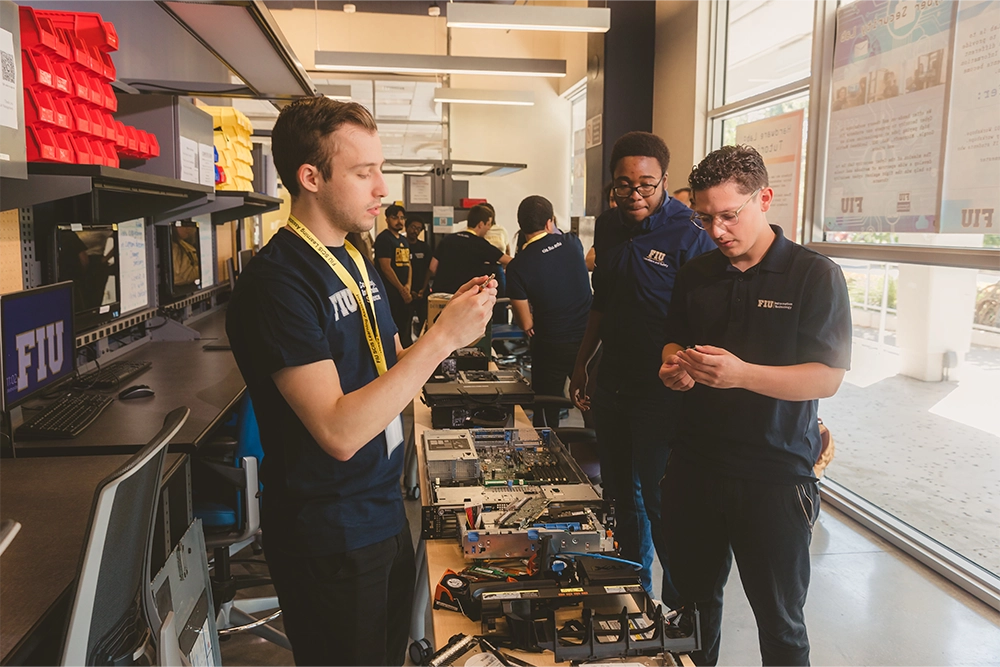
Designed for Engineering & Computing Students
Whether you study mechanical engineering, civil engineering, electrical engineering, computer science, or another CEC discipline, an AI Minor provides skills that strengthen your technical foundation and expand your career potential.
| Industry | Applications |
| Cybersecurity | Threat detection, anomaly detection, secure systems |
| Energy | Smart grids, renewables, antennas |
| Healthcare | Diagnostics, medical imaging |
| Manufacturing | Robotics, predictive maintenance, Quantum AI |
| Robotics | Autonomous robots, human-robot interaction, control systems |
| Transportation | Autonomous systems, smart mobility |
| Infrastructure | Smart cities, resilience systems |
Invent the Future with AI
Students should work with their current advisor to request admission to the Minor in Artificial Intelligence.