
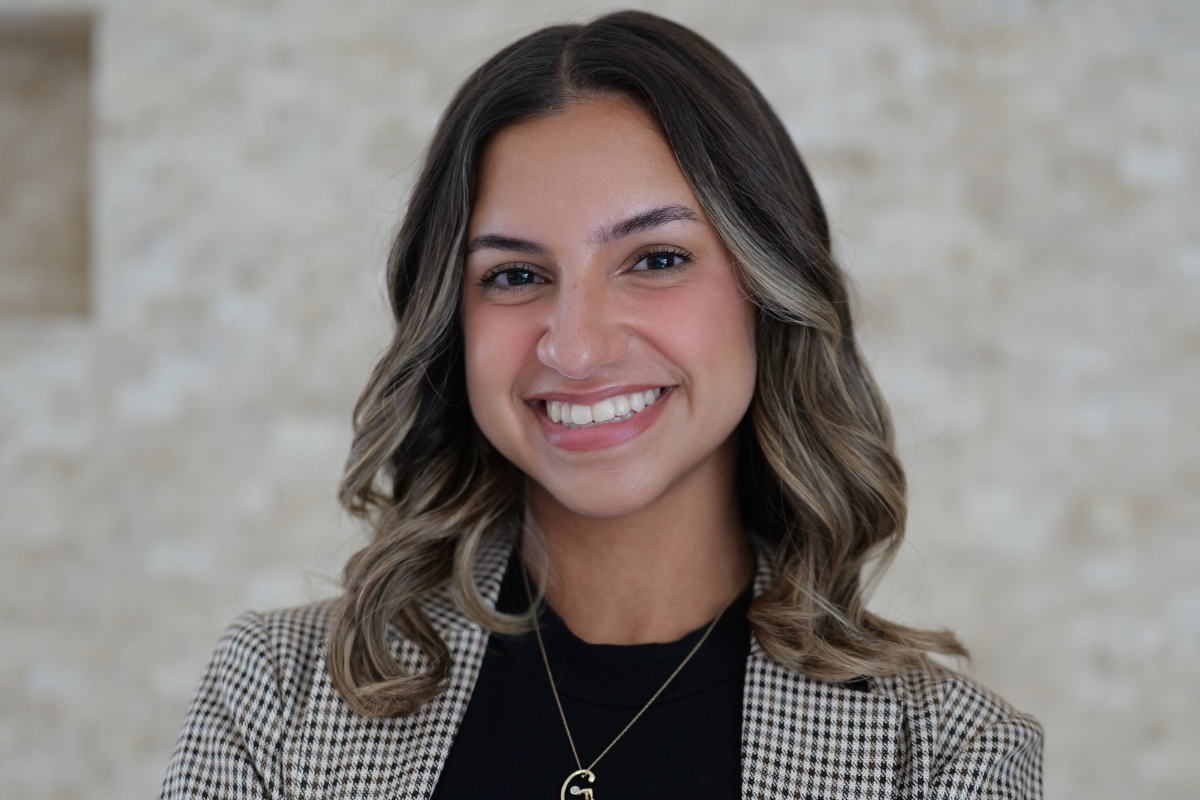
In high school, Gabriela De La Rosa thought she might want to design Formula One race cars. But a chance project studying bridges during her senior year changed everything. The FIU civil engineering master’s student, who also received her BS in civil engineering from the College of Engineering & Computing, was team captain for the American Society of Civil Engineers (ASCE) 3D Design Build Competition at the 2026 ASCE Southeast Student Symposium, where her team earned an impressive second place finish out of 19 competing universities.
What qualities did you exhibit as a child that were signs you might be a great engineer?
Since I was little, I’ve always been a creative person. I was naturally drawn to building with Legos from spare pieces or spending time drawing and creating things from scratch. Early on, I knew I wanted to pursue something that involved both problem-solving and creativity.
Did your family encourage or influence your decision to become an engineer?
I grew up in a very ‘fix it or make it ourselves’ kind of family, where problem-solving and creativity were part of every project we tackled. My grandfather had a big influence on me. He was always finding practical solutions and building things from scratch. Seeing that mindset firsthand really stuck with me and shaped how I approach challenges. Looking back, that combination of hands-on curiosity and resourcefulness was an early sign of the engineering mindset I carry today.
Tell us about your journey to pursue civil engineering.
In high school, I initially thought I wanted to pursue mechanical engineering because I was into Formula One and was drawn to the amount of precision engineering that went into designing those cars. However, during my senior year of high school, I took an engineering class with an incredible teacher, Mr. Reyes, who introduced us to multiple disciplines within the field, including civil engineering, which was something I hadn’t been exposed to before. One of the projects we worked on involved researching bridges, studying different structural systems and understanding how they carry loads. That project really changed everything for me.
How did that bridge project redirect your focus?
I found myself genuinely interested in how structures behave and the physics and statics behind it. It was the first time I saw engineering applied in a way that felt real and impactful on everyday life. That experience was the turning point that led me to pursue civil engineering. I credit Mr. Reyes for sparking that interest and opening my eyes to a field that I hadn’t previously considered, but that ultimately aligned much more with my strengths and interests.
When did you first get involved with the ASCE 3D Design Build Competition?
I first got involved in 2024, preparing for the 2025 symposium. That year, I served as a Design Co-Lead alongside Logan Alentado, Waleed Abouhana and our captain, Laura De Silva. Since it was our first time ever competing, we were figuring a lot out as we went, but it was a great experience learning how to take a design from concept to something we could actually build and test. Being able to place 3rd that year made it even more rewarding and showed us that we were on the right track.
What was your role with the group this year and what was the team’s accomplishment?
This year I stepped into the role of Team Captain, and my goal was to take everything we learned and come back with a stronger, more efficient design. I worked with an awesome team: Yolande Ambrose, Catalina Jaramillo, Reynold Gonzalez and Haseeb Langrial along with many others who helped us along the way. We put in a lot of time refining the design, improving our printing process and working more effectively as a team. In the end, we placed 2nd, which was a huge accomplishment for us. I’m incredibly grateful for everyone who had a piece in making this year’s bridge, and, more than anything, I’m proud of how much we grew from one year to the next and the effort everyone put in to get there.
Tell us a little about the internships you’ve had during your time at FIU.
I’ve had the opportunity to complete two internships, both of which helped shape my interests and career path. My first internship was with Choice Engineering Consultants, where I worked as a roadway design and transportation intern for about a year. In that role, I was exposed to the full process behind roadway projects, from understanding design manuals and standards to contributing to plan development. It gave me a strong foundation in how large-scale projects come together, but it also helped me better understand what I value in a work environment and a team. While I gained a lot from that experience, I still knew I wanted to pursue structural engineering.
How did your second internship help you achieve your goals?
Through a connection with my geotechnical professor, Dru Badri, I was introduced to Ardurra Group Inc. and was able to join their structures team as a summer intern. I’ve stayed on with them since, and it’s been an incredibly rewarding experience. I’ve had the chance to contribute to real design work, apply concepts from school and learn directly from experienced professional engineers. That hands-on experience has really reinformed that I’m on the right path in structural engineering.
What has been the most challenging and most rewarding experience during your time as an FIU student?
I think my most challenging and most rewarding experience has actually been the same: working on this year’s 3D bridge for the ASCE competition. It was definitely a challenge balancing everything at once with school, work and being a good team captain. There were a lot of ups and downs throughout the process. We went through many versions of the bridge, a lot of testing and plenty of moments where things didn’t work the way we expected. But each time, we learned from it and kept improving the design. At the same time, that’s what made it so rewarding. Seeing all of that effort come together and placing 2nd in the competition felt incredibly validating. More than just the result, it was the process of working through challenges with my team and creating a bridge that we were all proud of that made the experience so meaningful. Because of how tough it was, it made that final moment of celebrating with my team even more rewarding.
When you’re not in the classroom or working, what do you like to do?
I like to stay active and spend time on hobbies that let me be creative. I really enjoy 3D printing, so I’ll design and print small things at home for my family and friends, which is always fun and a nice way to apply some of the technical skills I’ve learned. I also love running. It’s something I do regularly with my boyfriend or my dad, and we’ve even run half marathons together! It’s a great way for me to get outside, stay active and spend quality time with people I’m close to.