
Heart disease remains the leading cause of death worldwide, and one of its most overlooked drivers is vascular calcification—the abnormal buildup of bone-like mineral in blood vessels. Once this process begins, there are currently no treatments to stop or reverse it.
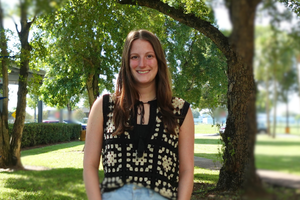
Meet Ph.D. candidate Sophie Ashbrook from the Department of Biomedical Engineering, whose dissertation combines genetics, cell biology, and drug testing to better understand and target vascular calcification. Sophie studies how two key molecules—CAV1 (caveolin-1), a protein that helps organize cell membranes, and EGFR (epidermal growth factor receptor), which controls cell growth and communication—work together to send the signals that cause blood vessels to “turn to bone.” At the same time, she is testing small-molecule drugs that block EGFR and reduce CAV1 levels in extracellular vesicles—an approach that shows promise in decreasing calcification.
By uncovering the mechanisms driving calcification and testing ways to stop it, Sophie’s research bridges the gap between discovery and therapy. Her work could help develop the first treatments to prevent dangerous complications such as hypertension and heart failure, particularly in patients with kidney disease.
Sophie’s motivation for this research is both personal and scientific. Heart disease runs in her family, fueling her determination to make a difference. Her fascination with the intersection of engineering, biology, and medicine—and the idea that blood vessels can literally harden like bone—continues to inspire her pursuit of new solutions to improve patient care.
Expected to graduate in Spring 2026, Sophie’s research highlights the potential to repurpose existing drugs—such as those already used in cancer treatment—to fight vascular calcification and advance cardiovascular medicine.
(Fun fact: The molecules Sophie studies, like EGFR, are the same ones targeted by certain cancer drugs—meaning treatments that already exist could one day help combat heart disease.)