
A New Chapter for Our College
I am excited to introduce myself as the new Dean of FIU's College of Engineering & Computing, and to begin what I think will be a genuinely rewarding conversation with all of you through this monthly message.
Let me start with what brought me here, because it speaks to what makes this college worth being excited about.
When I first visited FIU, I wasn't entirely sure what to expect. I knew about the broad strokes — Miami’s Carnegie R1 public university, one of the largest computing schools in the country, a research enterprise tackling some of the most pressing challenges of our time.
What I did not expect was the feeling I had walking from lab to lab: that I was seeing researchers operating at a level that the wider academic world had not yet fully recognized. Robotics systems pushing the boundaries of autonomous operation on land, in the air, and on water. Environmental resilience research with direct consequences for coastlines across this country. Advanced communications, cybersecurity, and quantum-enabled computing research with direct implications for secure, resilient operations and the protection of U.S. personnel on the battlefield. A leading college in research expenditures, with the awesome responsibility of educating about 9,300 students.
FIU has an important and distinct role to play in our future. Today, I want to share with you why I’m inspired as dean of our College of Engineering & Computing.
The real consequences of our work
As researchers, we aspire to solve interdisciplinary problems and create benefits for people. But before that, our interest has to initiate from somewhere.
My research career began, technically, in graduate school – but may have actually started on a boogie board.
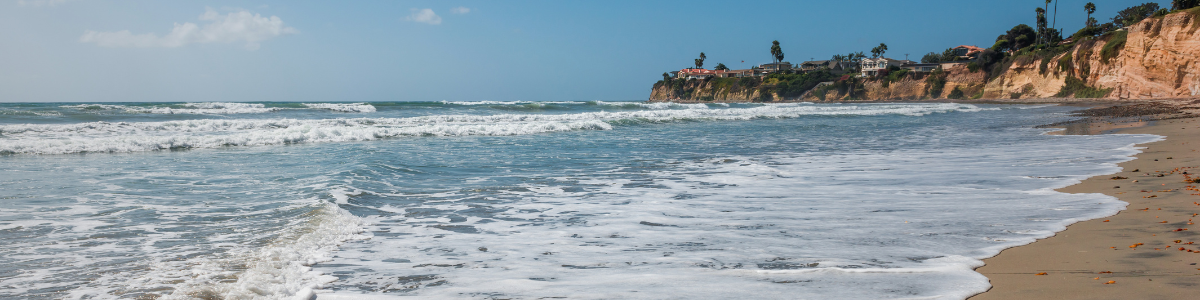
As a kid in San Diego, I grew up going to the beach with my father. There was something about the coast that fascinated me. It's dynamic, powerful, and has a way of demanding your full attention. Every trip, there was the thrill of the search for the sandbar, active and always shifting along the California coast. My enthusiasm eventually transformed into a research career in coastal engineering and sediment transport — understanding how water moves sand, and what that means for the people living along the coast.
Early in my career, I learned something important working at the U.S. Naval Research Laboratory: research earns its full value when it connects to real problems. There, every project connected to an application. This approach served me well as I went on to conduct research funded by major federal agencies, serve as a special government employee for one of the U.S. Army Corps of Engineers’ national boards, and lead multi-institutional applied projects, such as this recent Army Corps-funded installation we built in Delaware that tests how sustainable materials can be used at scale to prevent coastal erosion.
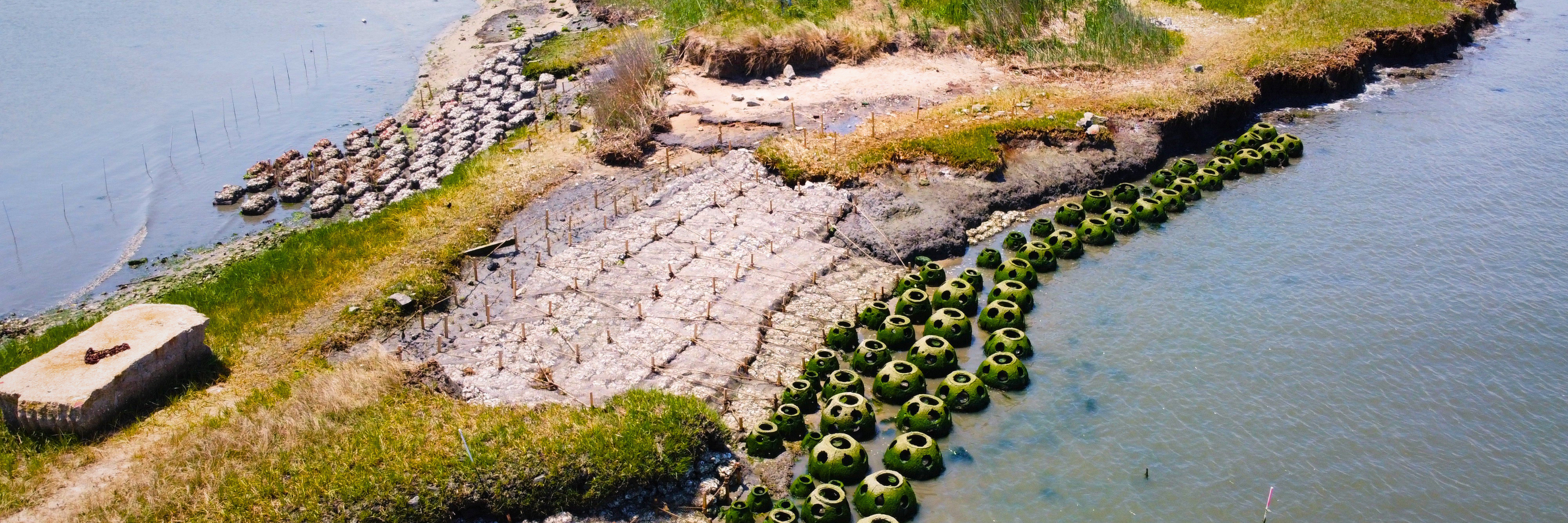
(Photo: Leigh Muldrow)
Today, I’m co-leading one of the most exciting projects I have been part of: NICHE, the National Full-Scale Testing Infrastructure for Community Hardening in Extreme Wind, Surge, and Wave Events. Backed by a $12.8 million NSF design grant, NICHE will be the world's largest testbed for studying the combined forces of extreme wind, storm surge, and waves on full-scale structures and coastal systems. When constructed, researchers and policymakers will be able to quantify how infrastructure actually responds under conditions that mirror a real hurricane, not a scaled-down approximation. FIU is leading this national, multidisciplinary effort.
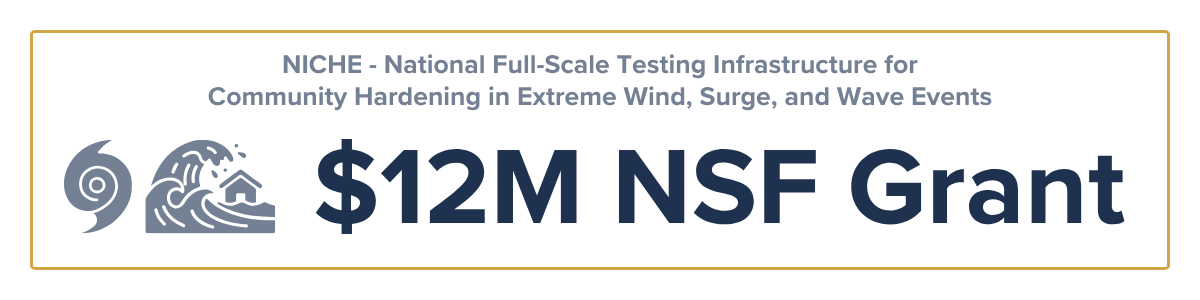
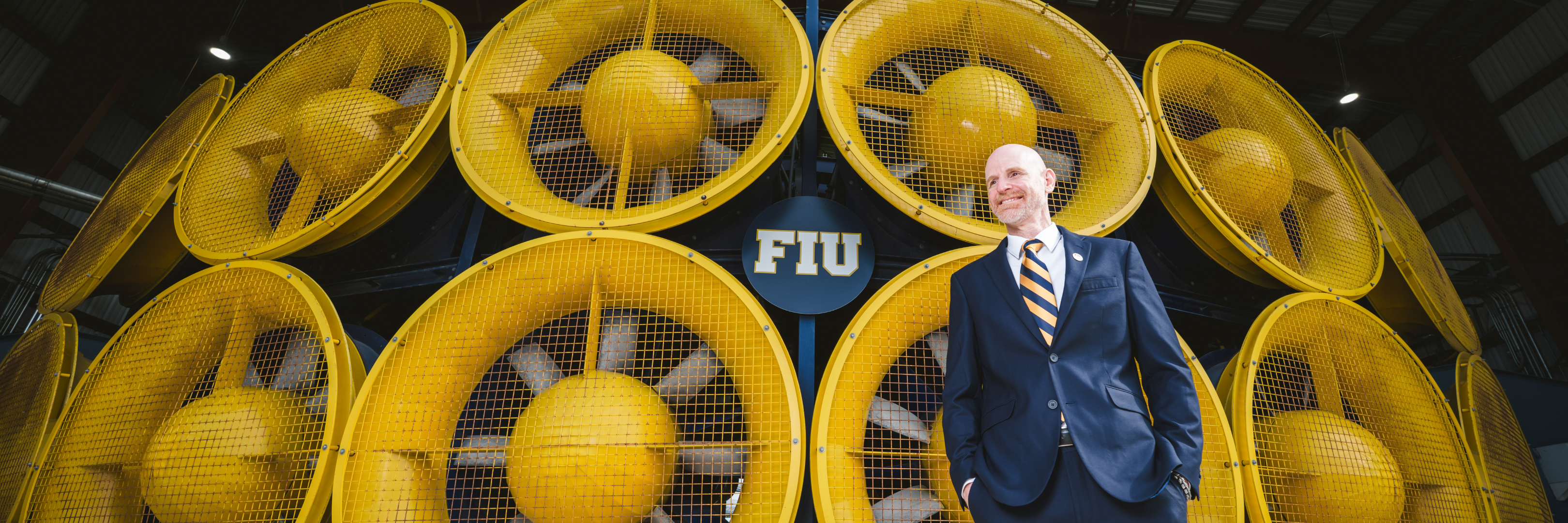
NICHE reflects something I saw clearly on that first visit to FIU and have continued to see since: this is a college that invests in infrastructure and expertise at a scale that matches the size of the problems it is trying to solve. FIU's Wall of Wind, born in the aftermath of Hurricane Andrew, grew from a two-fan prototype into a 12-fan, 157 mph hurricane wind simulator, the only university-based facility in the nation capable of testing full-scale structures in Category 5 winds. Its research has informed building codes across the world. NICHE is the next chapter in that legacy.
That same platform-scale mindset extends beyond resilience. In advanced manufacturing, FIU’s Army-backed, $22 million cold spray and rapid deposition facility represents a one-of-a-kind capability in Florida for next-generation repair, sustainment, and materials innovation.
Investments like these say something important about how FIU responds to societal challenges.
Thinking ten years out
This breadth of ambition shapes how I believe we need to approach research and education going forward. One idea I find myself returning to is the importance of orienting our thinking toward tomorrow's problems rather than only today's.
If we cast our mindset ten years out, we will likely be well-positioned for what arrives in five years, because change consistently outruns our projections. Artificial intelligence is the clearest proof: its foundations were built more than a decade ago, but its widespread arrival felt sudden to nearly everyone. Quantum computing, advanced robotics, aerospace — these are just some of the horizons worth scanning now. To thrive, we have to adapt and be ahead of the curve.
I'd like to close by thanking Interim Dean Inés Triay for her stewardship of the college. I am glad to be building on what she left behind.
What I want you to know about me is simple. I came to this role because I believe in people and I want to see them succeed. That's true for our faculty, our staff, our students, and the partners and colleagues we work alongside. The research priorities, the strategic planning, the industry relationships: all of it flows from there. I'm here to work alongside the people of this college and help us get to the next level together.
I look forward to meeting more of you and to everything we will build together.
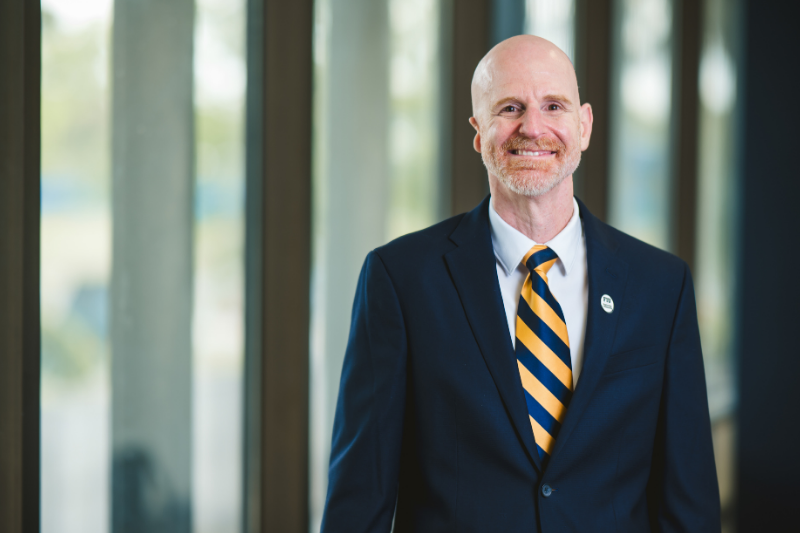
Jack Puleo
Dean, College of Engineering & Computing
Associate Vice President, Strategic Initiatives in Coastal Engineering and Resilience, Office of Research and Economic Development
Florida International University