
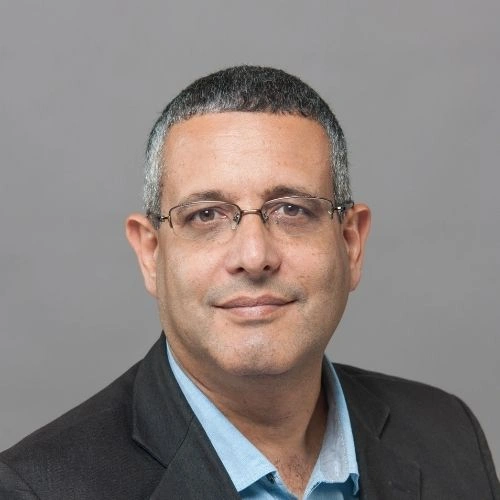
Biography
In 1988, Jorge Riera obtained a B.S. in Physics at the University of Havana. During 1990-1995, he was selected “Junior Associate” of the International Centre for Theoretical Physics (ICTP), Trieste (Italy), where he completed the required credits for the M.S. degree in Biophysics. In 1999, he received the Ph.D. degree in Physics from the University of Havana. Part of his Ph.D. thesis was completed at the Pitie-Salpetriere Hospital in Paris. Riera’s first postdoctoral term was at RIKEN Brain Science Institute (Japan), His second postdoctoral term was at Tohoku University (Japan). In 2004, he was appointed Assistant Professor at the Tohoku University School of Engineering.
He was promoted to Associate Professor at the Tohoku University School of Medicine in 2006. In 2011, he joined Florida International University (FIU), first as Visiting Professor and later (June 2012) as Associate Professor of the Department of Biomedical Engineering. In 2025, he was promoted to Full Professor. Riera’s main scientific interest is on the development of methods for the integration of neuroimaging multimodalities based on modeling mesoscopic phenomena in the brain. For the past ~20 years, he has directed the Neuronal Mass Dynamics (NMD) lab.
He has also been appointed by the Honor College, the Herbert Wertheim College of Medicine and the STEM Transformation Institute. Riera leads a multidisciplinary group of researchers that utilize avant-garde equipment for functional neuroimaging in small animals (e.g., MRI, high-density electrophysiological systems and confocal/multiphoton microscopy). Riera's research has been extensively funded by the Japan Society for the Promotion of Science, the Telecommunications Advancement Organization of Japan, the Japan Science and Technology agency, the National Institute of Health (NIH) and the National Science Foundation (NSF). Based first on data from humans and later from rodents, his team has developed biophysical models of cortical microcircuits and neurovascular/metabolic coupling.
These models underlie US-patented methods to study multi-scale cellular dynamics using brain imaging and electrophysiological techniques. Of particular interest is the development of pre-clinical rodent models to study epilepsy, migraine and dementia by means of brain mapping. In his laboratory, two groundbreaking techniques have been developed in collaboration with and commercialized by industrial partners: a) an EEG mini-cap (Cortech Solution) and b) a 3D microelectrode array (Neuronexus Tech.).
Awards & Honors
- Riera's early work has been essential to understanding the mechanisms of genesis of EEG and fMRI-BOLD signals in the brain, a work for which he was elected FAIMBE (class 2024).
Education
- 1999 - Ph.D. Physics,
- - University of Havana
- - Pitie-Salpetriere Hospital
- 1995 - M.S. Biophysics, ICTP, Italy
- 1988 - B.S. in Physics, University of Havana